Stay in the Wreckage: Why the Grief Positive Movement Is Telling Hustle Culture to Go to Hell
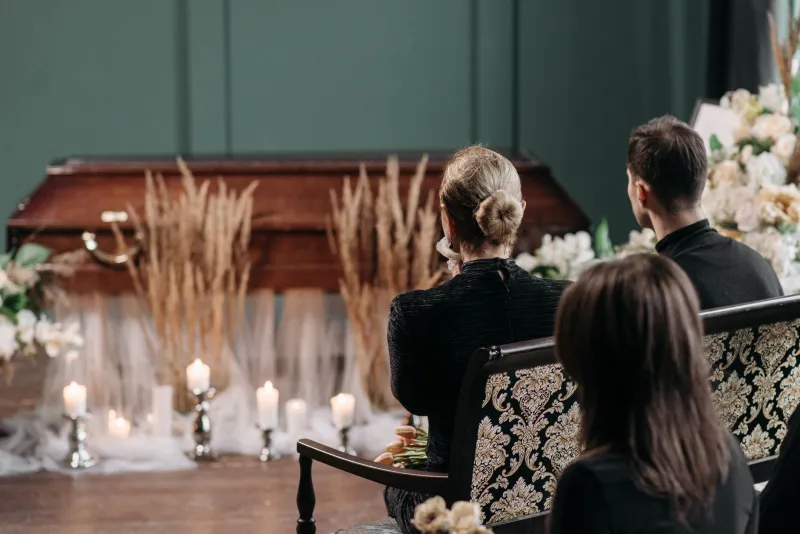
Somebody, somewhere, told you that you had two weeks. Maybe it was your HR handbook. Maybe it was your mother. Maybe it was the quiet social arithmetic of watching people's eyes glaze over the third time you mentioned the person you lost. Two weeks, maybe a month if they really loved you, and then you were supposed to be functional again. Sad on the inside, productive on the outside. Grief on your own time.
A growing coalition of therapists, artists, activists, and everyday people who've simply had enough are calling that arrangement exactly what it is: a con.
Welcome to the grief positive movement — and it is not here to make you feel better faster.
The Productivity Tax on Mourning
Here's the thing nobody puts on the motivational poster: American culture doesn't actually have room for grief. It has room for grief content — the tasteful Instagram carousel, the grief memoir with a redemption arc, the TED Talk where loss becomes the origin story of your startup. What it doesn't have room for is grief that just sits there, unmonetized, unresolved, not building toward anything.
"We've turned mourning into a self-improvement project," says Daria Okafor, a somatic therapist based in Oakland who works extensively with bereaved clients and communities of color. "There's this implicit demand that grief should produce something. A lesson. A glow-up. A reason the loss was worth it. And when people can't manufacture that narrative, they think they're doing grief wrong."
They're not doing grief wrong. The system is doing them wrong.
The five stages model — denial, anger, bargaining, depression, acceptance — was never meant to be a timeline. Elisabeth Kübler-Ross said so herself, repeatedly, before she died. But American culture grabbed those five words, turned them into a checklist, and quietly attached a deadline. Get to acceptance. Get back to work. Stop making everyone uncomfortable.
What "Grief Positive" Actually Means
The grief positive framework, as its practitioners describe it, isn't about wallowing or refusing to heal. It's about rejecting the premise that healing means erasure. It's about insisting that ongoing love for what you've lost is not pathology — it's loyalty. It's humanity.
Artist and death doula Marisol Vega runs grief circles out of a community space in Chicago's Pilsen neighborhood, where participants make altars, write letters to the dead, and share meals that belonged to people who are gone. "We're not trying to move on," she says, arranging marigolds on a table covered in photographs. "We're trying to move with. There's a huge difference. Moving on implies you leave the person behind. Moving with means they come with you, changed, but present."
This isn't a new idea — it's actually a very old one that dominant American culture bulldozed. Día de los Muertos, New Orleans jazz funerals, Irish wakes, Jewish shiva — cultures around the world have long understood that grief is communal, cyclical, and ongoing. The grief positive movement is, in many ways, a reclamation project.
Sitting Still as an Act of Resistance
Here's where it gets political, because everything eventually does.
A system that needs you productive cannot afford for you to grieve fully. Full grief is slow. It requires presence, stillness, the kind of deep internal reckoning that doesn't generate output. It asks you to prioritize your inner life over your calendar. To a culture built on extraction — of labor, of attention, of emotional bandwidth — that is genuinely threatening.
"Grief is one of the few experiences that forces you off the hamster wheel," says Portland-based therapist and activist Jerome Whitfield, who integrates anti-capitalist frameworks into his clinical practice. "When you're really inside it, you can't perform. You can't optimize. You're just a human animal in pain. And I think that scares the machinery, honestly. Because once you stop performing, you start asking questions about why you were performing in the first place."
In that sense, refusing to rush your mourning isn't passive. It's a quiet act of refusal. You are telling the system: my timeline, not yours.
Art That Refuses to Resolve
Some of the most interesting grief positive work is happening in studios and community art spaces, where makers are deliberately creating pieces that don't wrap up neatly. No redemption arcs. No silver linings stitched into the final panel.
Brooklyn-based textile artist Noa Seligman spent three years weaving a piece she calls Still Here — a massive, floor-to-ceiling installation made partly from her late partner's clothing. It doesn't tell a story of healing. It tells a story of persistence. "People kept asking me when I was going to finish it," she says. "And I kept thinking — finish it and then what? Put it away? Declare myself over it? The making is the grieving. Why would I want to stop?"
That's the grief positive ethos in a single question. Why would you want to stop? Not because the pain is good, but because the love underneath it is real, and honoring that love is worth more than any productivity metric you'll ever hit.
Building Spaces for the Unresolved
Community infrastructure matters here. One of the practical arms of this movement is the creation of physical and virtual spaces where ongoing grief is welcome — not as a problem to be solved but as a presence to be held.
Death cafes, which started in the UK and have spread across the US, bring strangers together over coffee to talk about death and loss without agenda. Grief circles like Marisol's in Pilsen operate on a drop-in model, meaning you can show up two years after your loss and nobody will look at you sideways. Online communities — some on Discord, some on smaller independent platforms after the algorithm-driven cruelty of Facebook grief groups became too much for too many — offer 3 a.m. company for people who've run out of friends willing to still listen.
"The loneliness of long-term grief is profound," says Okafor. "The acute phase, people show up. Casseroles, check-ins, all of it. But six months in, a year in, people expect you to be fine. The community spaces are filling a gap that our culture created by having such a narrow window for mourning."
You Don't Have to Earn Your Grief
Maybe the most radical thing the grief positive movement says is also the simplest: you don't have to justify your loss to deserve support for it. Disenfranchised grief — the mourning of exes, estranged family members, pets, miscarriages, friendships, identities you've had to leave behind — is as real as any other kind. You don't need a funeral program to prove you're hurting.
And you don't need a comeback story to make your pain worthwhile.
The wreckage is allowed to just be wreckage for a while. Maybe for a long while. Maybe forever, in some corner of you that stays soft and a little broken and completely, stubbornly human.
That's not failure. That's refusing to disappear.
Stay in it as long as you need.