No Deductible, No Problem: The Radical Care Networks Replacing Insurance With Each Other
When Simone's appendix ruptured in 2022, she didn't have insurance. She was thirty-one, freelancing in graphic design, and had been one of the 25 million-plus uninsured Americans who do the math every month and decide they can't make the numbers work. The hospital bill that followed was, by any reasonable measure, catastrophic.
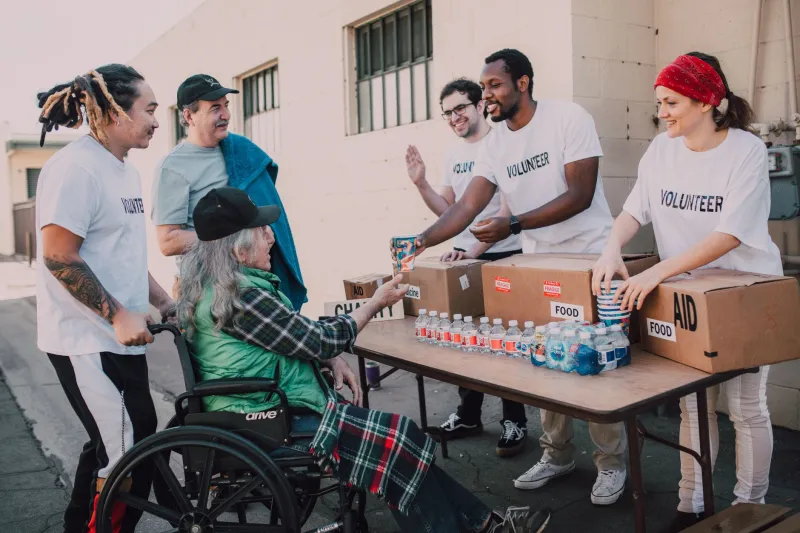
What happened next was not catastrophic. Within forty-eight hours of a message going out to her mutual aid network — a loose collective of about sixty people spread across Minneapolis and its suburbs — her community had organized meal delivery, a fundraiser that covered a significant chunk of the bill, a volunteer who sat with her in the hospital so she wouldn't be alone, and a retired nurse practitioner in the group who helped her navigate the billing department and apply for financial assistance she didn't know existed.
"I kept waiting for the catch," Simone says now. "There wasn't one. They just... showed up."
The Infrastructure of Interdependence
Mutual aid isn't new. It has deep roots in Black American communities, immigrant communities, labor organizing, and Indigenous traditions of collective care — all contexts where the official safety net was either absent or actively hostile. What's shifted in recent years is the visibility of these networks and the demographic range of people turning to them.
The pandemic accelerated this. Mutual aid groups that sprouted in 2020 to deliver groceries and medication to vulnerable neighbors didn't dissolve when the acute crisis passed. Many of them evolved, deepened, and began tackling the longer-term structural problems their members were facing — including the absolute nightmare of American healthcare.
What's emerging in some communities goes beyond emergency fundraising. These are care networks with genuine infrastructure: shared resource pools, skill inventories, rotating responsibilities, and explicit agreements about how members support each other through illness, mental health crises, disability, and the mundane but crushing logistics of navigating a medical system designed to extract money rather than provide care.
How They Actually Work
The structures vary enormously. Some networks are hyper-local — a single apartment building or neighborhood block. Others are organized around identity or shared values: queer communities, communities of color, disability justice networks, intentional communities with shared housing.
In Oakland, a network called the Tender Network operates as what its organizers describe as a "care pod" model. Members — currently around forty adults — each commit to a set of contributions based on capacity: some contribute financially to a shared emergency fund, others contribute time (driving to appointments, cooking during recovery, childcare), others contribute specialized knowledge (one member is a pharmacist, another a social worker, another a licensed acupuncturist who offers sliding-scale sessions to pod members).
"We did an audit of skills in the group when we started," says Renata, one of the founding members. "We had more expertise than most people realize they're surrounded by. We just never organized it."
Decisions are made collectively, and the group maintains a shared document that functions as a kind of living care agreement — outlining what members can ask for, what the group commits to providing, and how conflicts get resolved. It's not a legal contract. It's a social one.
The Legal and Practical Fault Lines
This is where it gets thorny. The moment money moves through an informal network, legal questions multiply. Is a shared emergency fund a taxable entity? What happens if a member who contributes services causes harm — say, a well-meaning but non-licensed practitioner gives advice that goes wrong? What are the liability implications of operating what is, functionally, an unlicensed health-sharing arrangement?
Most networks navigate this by staying deliberately informal and explicitly non-transactional. Contributions are framed as gifts. Skill-sharing is framed as friendship. No one is practicing medicine — they're being a neighbor.
"We're very careful about language," says Renata. "We're not a healthcare provider. We're a community that takes care of each other. There's a difference, and it matters legally."
Some networks have found partial shelter in existing legal structures. Health sharing ministries — a legally recognized alternative to traditional insurance — have been used by some communities as a framework, though their roots in religious exemption make them an uncomfortable fit for secular or progressive groups. Others have explored cooperative or nonprofit structures, though these come with administrative overhead that can undermine the organic nature of the network.
The Health Justice Commons, an advocacy organization focused on community-based health solutions, has been developing resources to help informal networks understand their legal exposure while preserving their structural flexibility. But there's no clean answer, and the networks doing this work are largely operating in a space the law hasn't fully caught up to.
The Emotional Economy
Beyond the practical mechanics, what these networks are building is something harder to quantify: a culture of interdependence in a society that has spent decades evangelizing self-sufficiency. The ideological dissonance is real. Americans are steeped in the mythology of the individual — the idea that needing help is weakness, that accepting it creates obligation, that the only safe position is one where you don't owe anyone anything.
Mutual aid networks are a direct challenge to that mythology. They run on the explicit acknowledgment that none of us are actually self-sufficient, that the fiction of independence has always been subsidized by invisible labor and unacknowledged support, and that the only honest response to that reality is to make the support visible and reciprocal.
"People come in apologizing for needing things," says Renata. "That's the first thing we work on. You're not a burden. You're a member. Needing is part of the deal."
The Limits and the Horizon
None of this is a substitute for universal healthcare, and the people building these networks are generally the first to say so. A care commune can absorb a lot — meals, rides, emotional support, alternative and complementary care, financial solidarity in a crisis. It cannot perform surgery. It cannot provide chemotherapy. The gaps are real, and the weight of them falls hardest on members with the most complex medical needs.
But as a supplement to a broken system, and as a living demonstration that a different kind of social contract is possible, these networks are doing something that no insurance product can replicate: they're making people feel less alone in their bodies and their lives.
Simone is still paying off her hospital bill, slowly. But she's also now one of the more active members of her mutual aid network, coordinating care for two elderly members who live alone and showing up when the group puts out a call. The transaction, if you can call it that, runs in all directions at once.
"I used to think community was something you fell into," she says. "Now I think it's something you build. On purpose, over and over, every time someone needs something."